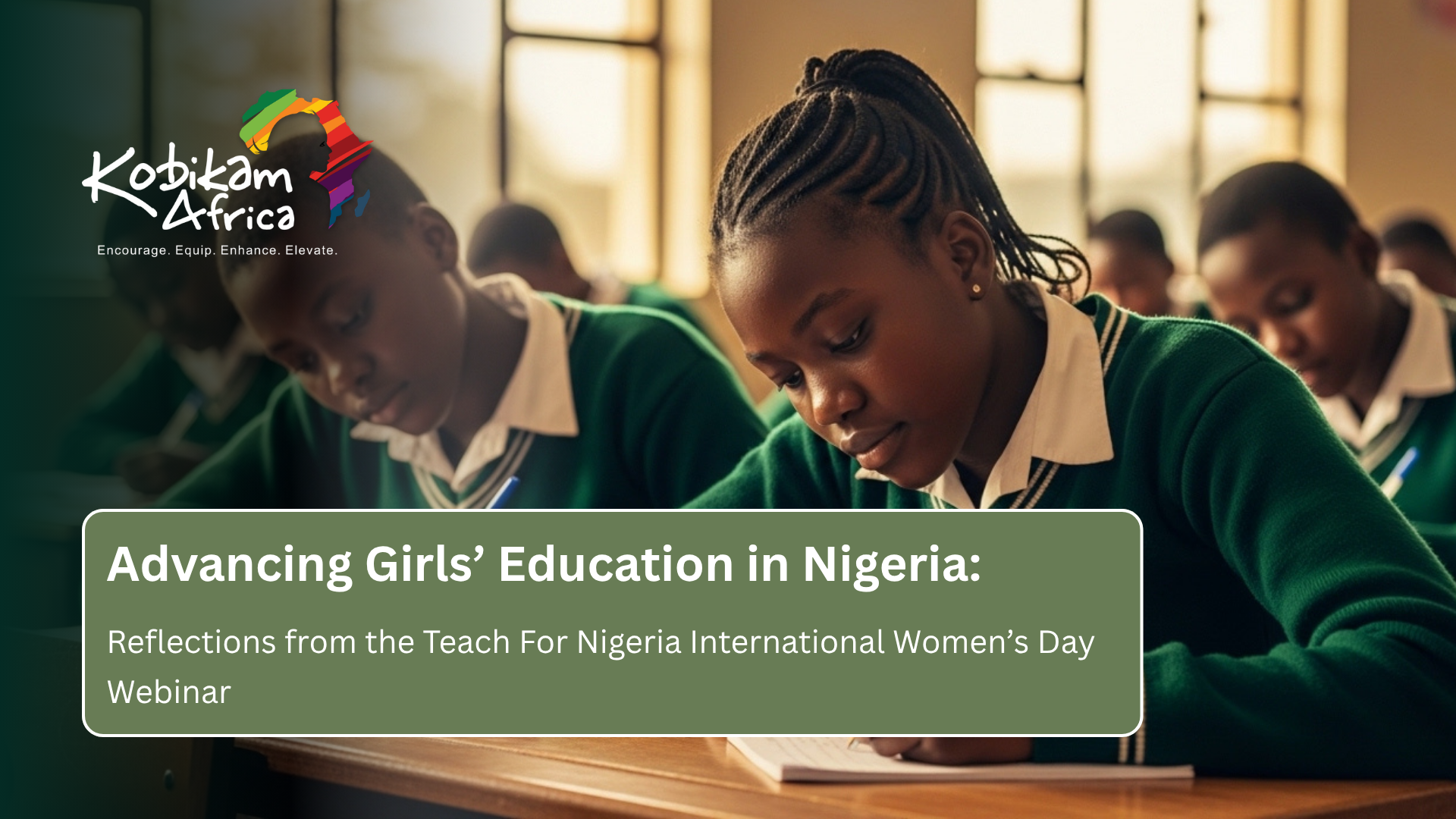
In celebration of International Women’s Day, education leaders and advocates gathered for a webinar hosted by Teach For Nigeria to discuss the theme “From Classroom to Community: Women Leading Education, Justice and Change in Nigeria.”
The conversation highlighted the urgency of addressing Nigeria’s education crisis. With more than 20 million children currently out of school, Nigeria accounts for one of the largest populations of out-of-school children globally. Data also shows that girls are disproportionately affected, making up a significant share of those excluded from education and less likely to complete secondary school.
Teach For Nigeria is one of the necessary organisations that continues to work toward a future where every Nigerian child, regardless of socioeconomic background, has access to quality education. The webinar brought together voices from across sectors to explore how communities, institutions, and policymakers can work together to advance gender justice and educational equity.
Kobikam Africa’s Perspective
During the discussion, Ijeoma Adesanya, founder and CEO of Kobikam Africa, contributed insights from a policy and gender justice perspective, highlighting structural gaps that continue to limit opportunities for girls and women.
She noted that while Nigeria has several policies designed to protect children and promote gender equality, the major challenge lies in implementation. For instance, despite the existence of the Child Rights Act (Nigeria), only 12 states have implemented the act. This gap between policy and practice, she emphasised, is a recurring challenge within governance systems.
According to Ijeoma, strengthening implementation requires coordinated action, including improved funding for interventions, stronger legal frameworks, and clearer accountability for translating policies into measurable impact.
Drawing from Kobikam’s experience working with organisations to develop gender action plans, she also highlighted the persistent knowledge gap around gender inclusion within institutions. Many organisations express support for gender equality but struggle to understand how bias and structural barriers influence workplace dynamics.
One tool that helps reveal these gaps, she explained, is data. Disaggregated data can highlight disparities in leadership representation, pay structures, and promotion pathways, making it easier for institutions to recognise where inequalities exist and take steps to address them.
Ijeoma further noted that conversations around gender equality sometimes face resistance due to concerns about “reverse discrimination”. However, she stressed that advancing gender inclusion is ultimately about expanding opportunities and strengthening institutions, not disadvantaging any group.
Finally, she highlighted the importance of women’s representation in leadership, particularly in governance. Low representation of women in decision-making spaces can limit the attention given to policies affecting girls’ rights and education outcomes.
Continuing the Conversation
The discussion reinforced a key message: achieving gender justice in education requires action at every level, from classrooms to communities, institutions, and national policy spaces.
At Kobikam Africa, these insights align closely with our ongoing work to strengthen gender-responsive policies and institutional practices, as well as our commitment to advancing initiatives such as the Rise to Potential campaign, which seeks to improve girls’ access to education in Nigeria.