There are an estimated 7.6 million girls currently out of school in Nigeria, according to UNICEF. This gap is sobering, not only because of what it reflects about the present reality of our educational system, but because of what it could mean for the future. When fewer girls have access to education, fewer girls have the opportunity to become who they want to be, to dream freely, to be ambitious, and ultimately to contribute meaningfully to the wider economic and social ecosystem. This is not just another statistic; it represents a significant loss of potential on a national scale.
It is against this backdrop that the Rise to Potential (RTP) Campaign was conceptualised by Kobikam Impact Foundation. The campaign is grounded in the belief that improving girls’ education outcomes requires more than structural access alone. It requires a deliberate focus on mindset, how girls see themselves, how they understand their capabilities, and how they perceive the possibilities available to them.
At the same time, we recognise that girls do not develop these mindsets in isolation. The environments around them, families, schools, communities, and institutions, play a powerful role in shaping how confidence and ambition are formed. As such, the RTP Campaign is designed not only to support girls directly, but also to engage the broader systems that influence their growth, with the aim of creating more lasting and sustainable impact over time.
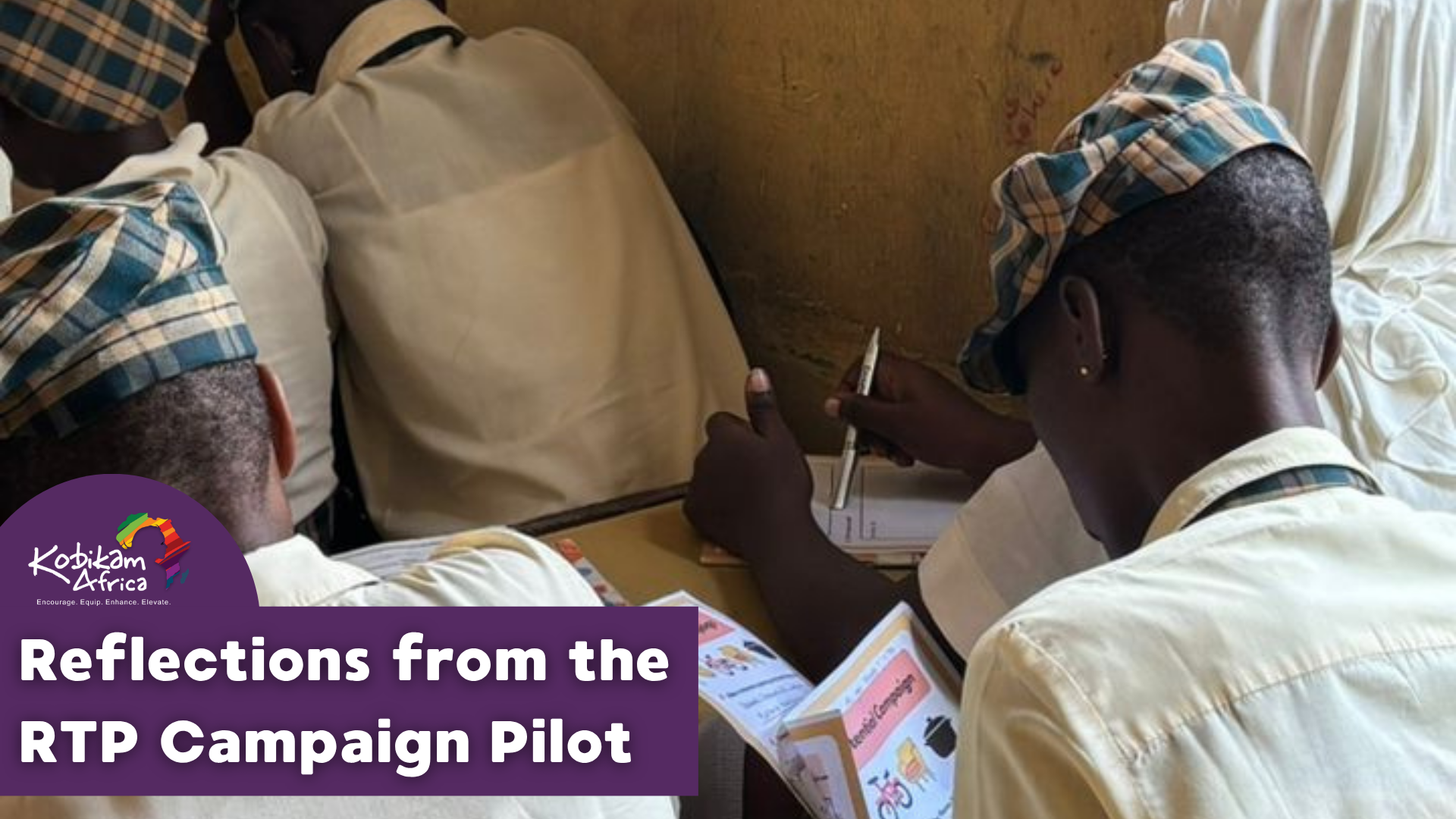
As part of the campaign’s development, we conducted a pilot session on Tuesday, 17th March with the SS3 students at Girls’ Grammar Secondary School, Ikoyi. The session reached 107 students and was delivered in partnership with FLOW, who supported both the development of materials and the facilitation of the engagement.
The pilot was designed as an interactive and reflective session, with a strong emphasis on mindset. Through guided discussions and structured workbook exercises, the students were encouraged to think critically about their aspirations, how they see themselves, and the factors they believe could influence their future. The session created space for honest reflection, allowing the girls to articulate both their ambitions and their concerns.
The insights from the session were both clear and instructive. While many of the girls expressed strong aspirations for their future, their responses also revealed varying levels of confidence and clarity on how those ambitions could be realised. Common concerns included financial limitations, external expectations, and uncertainty about available pathways. At the same time, the structure of the session enabled many of the students to begin reframing these perspectives, recognising their strengths and identifying small, actionable steps towards their goals.
Beyond the immediate engagement, the pilot has provided valuable direction for the continued development of the RTP Campaign. It has reinforced the importance of combining access-focused efforts with intentional mindset interventions, and of creating structured spaces where girls can reflect, question, and build confidence in their own potential.
As we move forward, we are taking time to carefully review and collate the insights gathered from the session. These learnings will guide the refinement of the campaign’s structure and delivery, ensuring that it remains responsive to the realities and needs of the girls it is designed to support.
This pilot marks an important first step, and we look forward to building on it as we continue working towards empowering more girls to recognise and rise to their full potential.
If you would like to partner with us in this or any other capacity, please reach out to contactus@kobikamafrica.com